
Forex trading costs are the combined spread, commission, and swap charges a trader pays to open, hold, and close a position, and together they determine how much price movement is needed just to break even. Understanding every layer of cost is essential before choosing a broker, as covered in this FXM680 guide.
Table of Contents
- What Are Forex Trading Costs? An In-Depth Overview
- Why Trading Costs Matter for Every Strategy
- Detailed Analysis of Each Cost Component
- Step-by-Step Guide to Calculating Total Trading Cost
- Common Pitfalls to Avoid With Trading Costs
- Frequently Asked Questions About Trading Costs
- Continue Your Forex Learning Journey with FXM680
What Are Forex Trading Costs? An In-Depth Overview
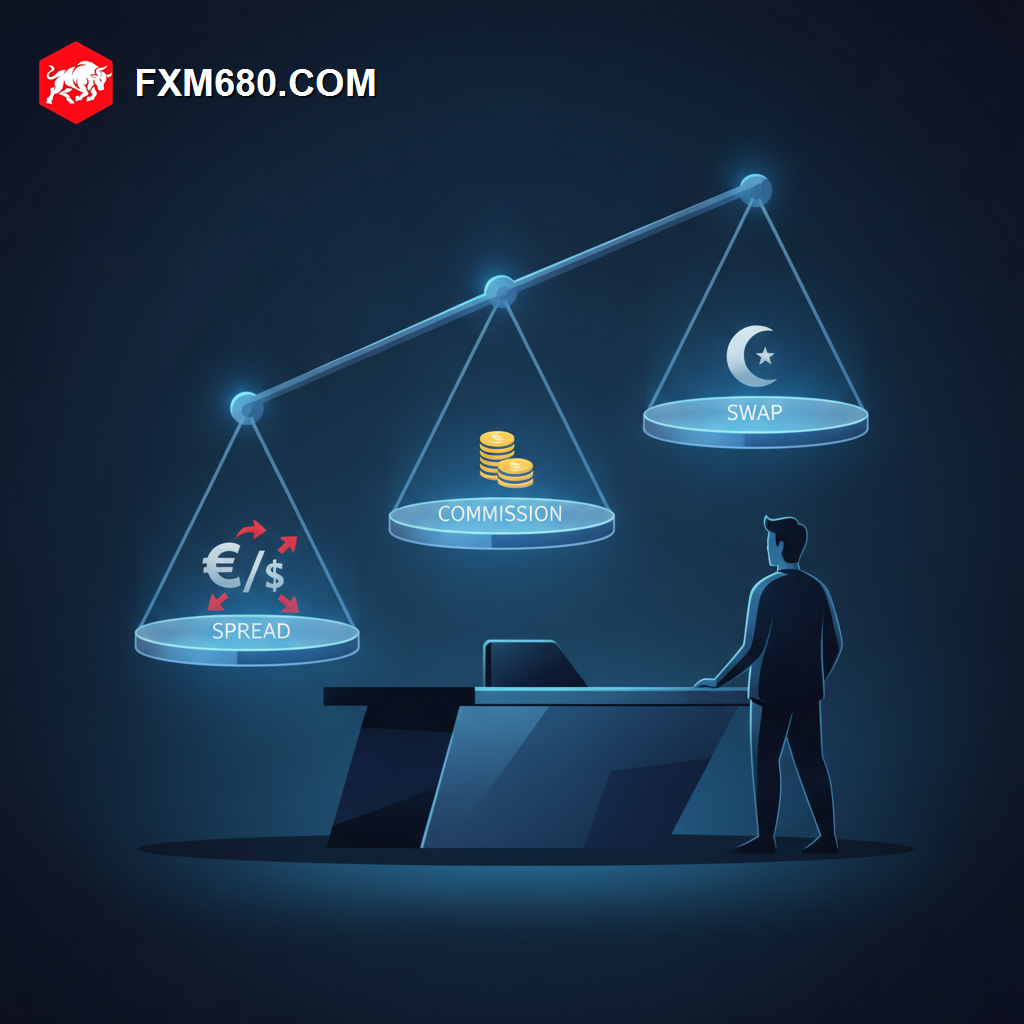
Forex trading costs are every expense a trader incurs from entering to exiting a position. The three primary components are spread, the gap between buy and sell price; commission, a fixed fee some brokers charge per trade; and swap, the overnight interest applied to positions held past the daily rollover.
These costs exist because brokers need to generate revenue for providing market access, and because forex trading is fundamentally a leveraged currency exchange with real interest implications. No broker offers completely free trading, even when marketing highlights “zero commission” or “tight spreads.”
Total trading cost directly determines the minimum favorable price movement a position needs before it becomes profitable, making cost awareness a foundational skill rather than an afterthought.
Why Trading Costs Matter for Every Strategy
High-frequency strategies like scalping are especially sensitive to spread and commission, since dozens of trades per day multiply even small per-trade costs into a significant total. Swing and position traders, meanwhile, are more exposed to swap, since their positions remain open across multiple overnight rollovers.
Comparing brokers purely on advertised spread numbers can be misleading if commission structures or swap markups differ significantly. A complete view of all three cost components is the only reliable way to compare the true expense of trading with one broker versus another.
Detailed Analysis of Each Cost Component
Spread
Spread is the difference between the bid price and the ask price, quoted in pips. It is charged the instant a trade opens, regardless of how long the position stays open, and represents the most immediate cost of any trade.
Commission
Commission is a separate, often fixed, fee charged per lot traded, common on raw spread and ECN account types where the spread itself is kept extremely tight. Standard account types more commonly build cost entirely into a wider spread instead.
Swap
Swap is the overnight interest adjustment covered in detail elsewhere in this Academy, relevant only to positions still open at the daily rollover cutoff, and calculated per lot per night held.
| Cost Type | When Charged | Most Relevant To |
|---|---|---|
| Spread | Immediately on trade entry | All traders, every trade |
| Commission | Per lot traded, if applicable | Raw spread and ECN accounts |
| Swap | Nightly, if position stays open | Swing and position traders |
Step-by-Step Guide to Calculating Total Trading Cost
- Check the broker’s spread for the specific currency pair, since spread varies pair by pair.
- Add any per-lot commission the account type charges, if the broker uses a commission model.
- Estimate the expected holding period and multiply the nightly swap rate by the number of nights.
- Sum spread cost, commission, and estimated swap to arrive at total expected trading cost.
- Compare that total against the position’s realistic profit target to judge whether the trade is worthwhile.
Common Pitfalls to Avoid With Trading Costs
A frequent pitfall is comparing brokers only by headline spread while ignoring commission, which can make a “zero spread” account appear cheaper than it actually is once fees are included. Another is neglecting swap entirely when planning multi-day trades, only to discover a meaningful chunk of profit erased by accumulated overnight charges.
Traders also sometimes forget that costs scale directly with position size, meaning larger lots multiply every cost component proportionally, not just potential profit.
Frequently Asked Questions About Trading Costs
What is the biggest cost in forex trading? For most short-term traders, spread is the largest and most immediate cost, though commission and swap can matter more depending on account type and holding period.
Can trading costs really be zero? No, every broker generates revenue somehow, whether through spread, commission, or swap, even when marketing emphasizes one cost being minimal.
Do trading costs differ by account type? Yes, standard accounts typically build cost into spread, while raw spread and ECN accounts separate cost into a tighter spread plus an explicit commission.
How can a trader minimize total cost? By comparing brokers on full cost, not spread alone, and by matching account type to trading style, since scalpers and position traders have different cost priorities.
Continue Your Forex Learning Journey with FXM680
Understanding the full picture of forex trading costs is a foundational step toward evaluating brokers and strategies realistically. The next lessons in this Academy break down each cost component, including spread and commission, in far greater detail.
Disclaimer: The content provided on this page is for informational and educational purposes only. Trading financial markets involves significant risk. Consult with a certified financial advisor before making any investment decisions.
Keep Learning
Break Down Every Trading Cost
Spread, commission, and swap all shape your real trading results. Explore the full FXM680 Forex Academy to understand each cost in depth and trade with a clear view of what you actually pay.