
Netting vs hedging account describes two different ways a broker handles multiple positions on the same currency pair, either combining them into one net position or keeping them separate and independently tracked. The distinction affects how hedging strategies function, as this FXM680 guide explains.
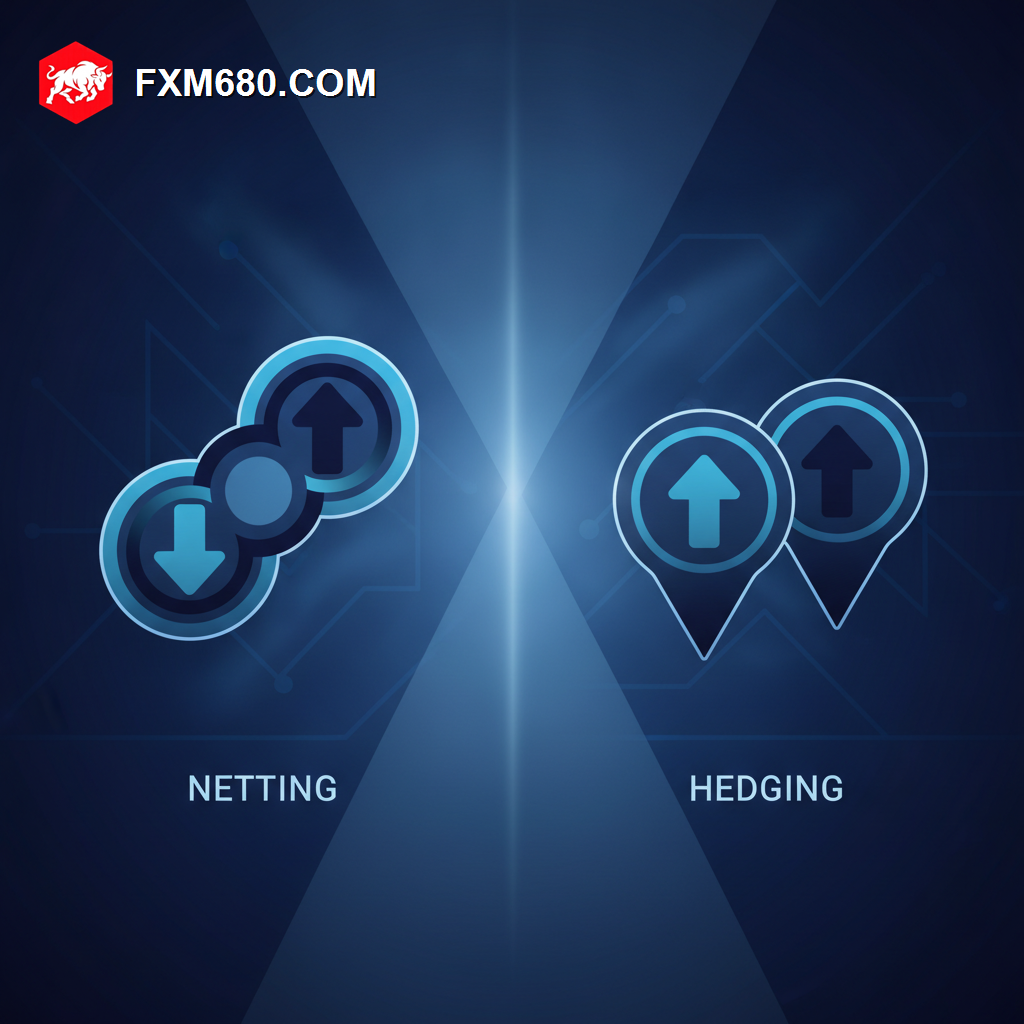
Table of Contents
What Is The Netting vs Hedging Account Difference?
A netting account automatically combines all positions on the same currency pair into a single net position, meaning a new opposite trade reduces or closes the existing one rather than existing separately alongside it.
A hedging account allows multiple positions on the same pair to exist independently, including simultaneous long and short positions, each tracked and managed separately with its own stop loss and take profit.
This distinction is set at the account or regulatory level, not chosen freely on a trade-by-trade basis, meaning traders must select the appropriate account type in advance if hedging is part of their strategy.
Why This Distinction Matters for Traders
Traders who rely on direct same-pair hedging strategies need a hedging-enabled account, since a netting account would simply offset the opposite trades rather than keeping them separate.
Understanding this distinction also matters for regulatory reasons, since certain jurisdictions, including US-regulated forex accounts, mandate netting rather than allowing hedging accounts at all.
Detailed Analysis of Netting and Hedging Accounts
Netting Account Behavior
On a netting account, opening a sell order while a buy order is active on the same pair automatically reduces the existing position size rather than creating two separate positions.
Hedging Account Behavior
On a hedging account, a new buy and an existing sell on the same pair coexist as two distinct positions, each with independent stop loss, take profit, and tracking.
Regulatory Context
Some regulators, particularly in the United States, require netting accounts and prohibit direct same-pair hedging, reflecting differing regulatory philosophies around retail trading risk.
| Account Type | Same-Pair Opposite Trade Behavior | Hedging Support |
|---|---|---|
| Netting Account | Automatically offsets existing position | Not supported for same pair |
| Hedging Account | Creates a separate, independent position | Fully supported |
Step-by-Step Guide to Choosing The Right Account Type
- Determine whether the intended strategy relies on direct same-pair hedging.
- Check the broker’s account options and applicable regulatory jurisdiction.
- Select a hedging-enabled account if independent same-pair positions are required.
- Select a netting account if simplicity and combined position tracking are preferred.
- Confirm the choice before opening live positions, since account type is typically fixed once set.
Common Pitfalls to Avoid
A common pitfall is assuming all accounts support hedging by default, then being surprised when a netting account automatically offsets an intended hedge trade. Another is choosing a hedging account without a genuine strategic need for it, adding unnecessary complexity to position tracking.
Frequently Asked Questions
Can a trader switch between netting and hedging accounts? This depends on the broker; some allow opening a separate account of the other type, though existing accounts typically cannot be converted directly.
Which account type is more common globally? Both are widely offered, though regulatory requirements in certain regions, such as the United States, mandate netting specifically.
Does a hedging account cost more to maintain? Not inherently, though managing multiple simultaneous positions can increase total spread, commission, and swap costs compared to a single netted position.
Continue Your Forex Learning Journey with FXM680
Understanding netting versus hedging accounts ensures a trader’s chosen strategy actually functions as intended. The next lessons in this Academy explore execution speed and order types in further detail.
Disclaimer: The content provided on this page is for informational and educational purposes only. Trading financial markets involves significant risk. Consult with a certified financial advisor before making any investment decisions.
Keep Learning
Choose The Right Account Structure
Netting and hedging accounts behave very differently. Explore the full FXM680 Forex Academy to choose the structure that fits your strategy.