
Market cycles describe the recurring, broader pattern markets tend to move through, from accumulation and uptrend to distribution and downtrend, repeating over time. Recognizing where a market currently sits within this cycle adds valuable strategic context, as this FXM680 guide explains.
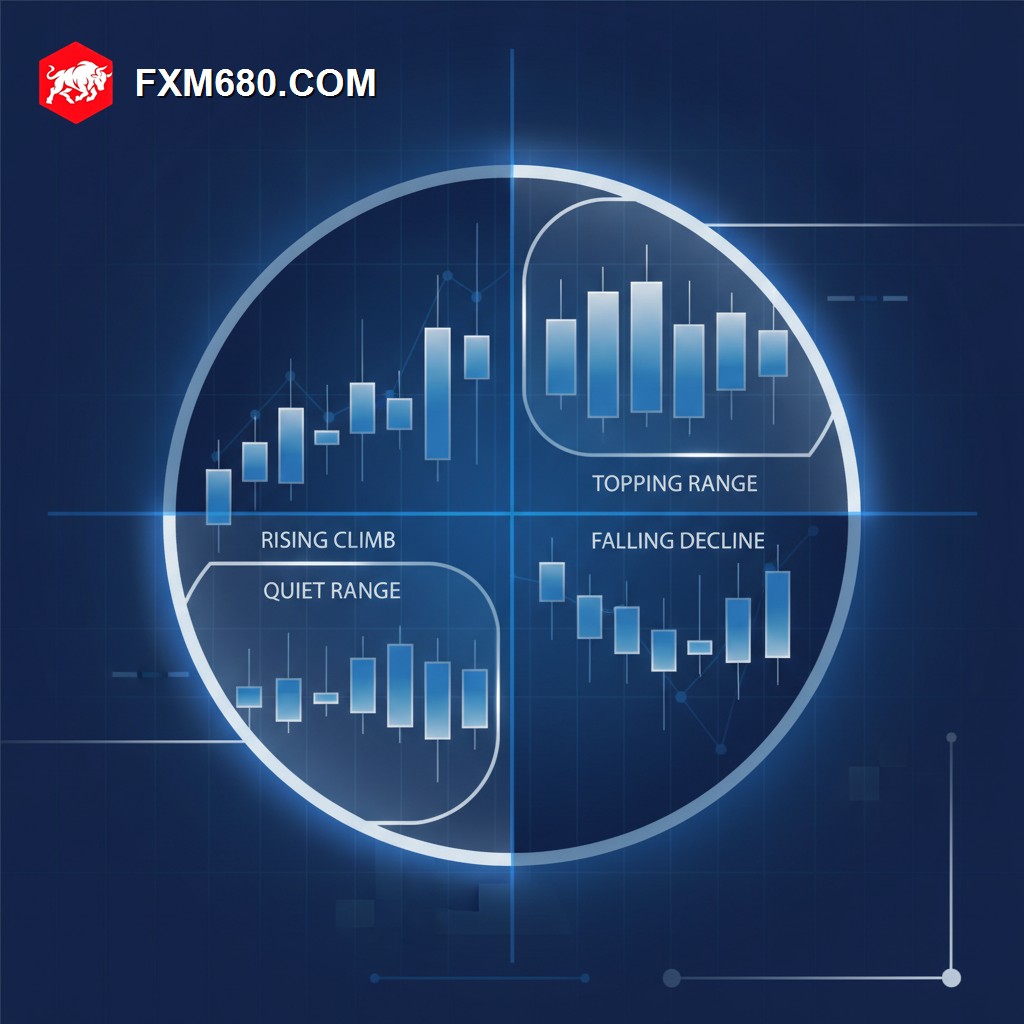
Table of Contents
Understanding Market Cycles: An Overview
A typical market cycle moves through four broad phases: accumulation, markup, distribution, and markdown, before potentially repeating in a new cycle.
Accumulation reflects quiet, range-bound buying interest, while markup represents the visible uptrend that follows once buying pressure becomes dominant.
Distribution and markdown mirror this pattern in reverse, reflecting a topping process followed by a visible downtrend as selling pressure takes over.
Why Market Cycles Matter
Recognizing the current cycle phase adds broader strategic context beyond individual trend or structural analysis alone.
This framework also matters because it connects to institutional order flow concepts explored later in this Academy, offering a bridge to more advanced market structure analysis.
Detailed Analysis of Cycle Phases
Accumulation
A quiet, range-bound phase where buying interest gradually builds, often following an extended prior decline, without yet producing a clear visible trend.
Markup
The visible uptrend phase, where accumulated buying pressure becomes dominant, producing the clear higher high, higher low structure covered earlier.
Distribution and Markdown
Distribution reflects a topping process similar to accumulation in reverse, followed by markdown, the visible downtrend phase completing the cycle.
| Cycle Phase | Characteristic |
|---|---|
| Accumulation | Quiet, range-bound buying interest |
| Markup | Visible uptrend phase |
| Distribution/Markdown | Topping process followed by downtrend |
Step-by-Step Guide to Identifying Cycle Position
- Assess whether price is currently trending clearly or moving sideways.
- Consider recent price history to judge whether a range follows a decline or a rally.
- Watch for early markup or markdown signs, like structural breaks from a range.
- Adjust strategy expectations based on the likely current cycle phase.
- Reassess periodically, since cycle position shifts as new price data develops.
Common Pitfalls to Avoid
A common pitfall is assuming cycle phases follow a rigid, predictable timeline, when actual duration varies enormously across different market conditions. Another is misidentifying a genuine trending market as an accumulation or distribution range.
Frequently Asked Questions
How long does each cycle phase typically last? Duration varies enormously depending on market conditions, timeframe, and the specific instrument involved.
Is this framework more relevant to certain markets? While applicable broadly, it’s frequently discussed in relation to markets particularly influenced by larger institutional participants.
Can cycle analysis replace trend and structure analysis? No, it complements rather than replaces the trend and structural tools already covered in this Academy.
Continue Your Forex Learning Journey with FXM680
Market cycles add valuable broader strategic context to trading decisions. The next lesson in this Academy explores accumulation and distribution in greater depth.
Disclaimer: The content provided on this page is for informational and educational purposes only. Trading financial markets involves significant risk. Consult with a certified financial advisor before making any investment decisions.
Keep Learning
See The Bigger Cyclical Picture
Markets move in recurring phases worth recognizing. Explore the full FXM680 Forex Academy to keep building your strategic market view.