
A country’s trade balance, the gap between what it exports and imports, feeds directly into currency supply and demand and is one of the fundamental forces behind longer-term exchange rate trends. This FXM680 guide explains the connection.

Table of Contents
- What Is The Trade Balance? An In-Depth Overview
- Why The Trade Balance Matters for Traders
- Detailed Analysis of the Currency Connection
- How Traders Typically Use Trade Balance Data
- Trade Balance Versus Current Account
- Common Pitfalls to Avoid
- Frequently Asked Questions
- Continue Your Forex Learning Journey with FXM680
What Is The Trade Balance? An In-Depth Overview
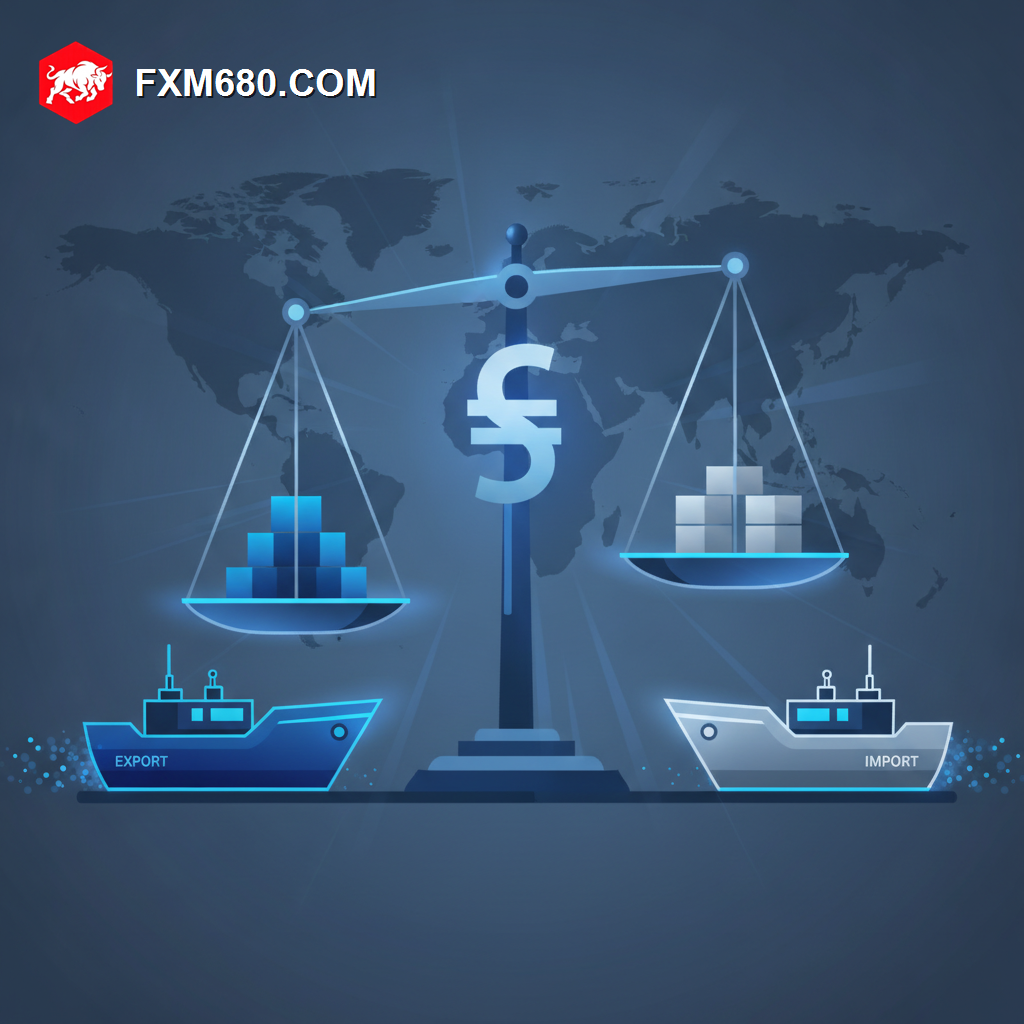
The trade balance measures the difference in value between a country’s exported and imported goods and services over a given period. When exports exceed imports, a country runs a trade surplus; when imports exceed exports, it runs a trade deficit. It’s released as a regular economic report in most major economies and closely watched as one indicator of a country’s broader economic and currency health.
Why The Trade Balance Matters for Traders
Trade balance significantly influences currency valuation by directly affecting supply and demand dynamics in the foreign exchange market. Foreigners generally must buy a country’s domestic currency to pay for that country’s exports, creating natural demand that can support the currency’s value, while a persistent trade deficit implies the opposite dynamic building over time.
Detailed Analysis of the Currency Connection
Trade Surplus Dynamics
A country running a consistent trade surplus tends to see steady foreign currency demand flow into its own currency as trading partners pay for its exports, which can provide gradual, sustained support for the exporting country’s exchange rate over time. Nations with trade surpluses tend to see their currencies appreciate as a result of this increased demand.
Trade Deficit Dynamics
A country running a persistent trade deficit needs to sell more of its own currency to purchase foreign goods, increasing currency supply in the market and weighing on its value over time. Countries with trade deficits tend to see their currencies weaken as this dynamic builds.
Offsetting Capital Flows
A trade deficit doesn’t automatically weaken a currency, since strong foreign investment inflows — such as capital seeking that country’s bonds or equities — can offset the trade imbalance and support the currency regardless of the underlying trade figures.

| Trade Balance Result | Typical Currency Implication |
|---|---|
| Trade surplus | Increased foreign demand, gradual currency support |
| Trade deficit | Increased currency supply, gradual currency pressure unless offset by capital inflows |
How Traders Typically Use Trade Balance Data
Most traders treat the trade balance as one piece of a broader fundamental picture rather than a standalone trading signal, watching for the underlying trend across several releases rather than reacting heavily to any single monthly figure, since trade balance is closely monitored precisely because of its direct impact on a currency’s supply and demand. Comparing a country’s trade balance trend against its interest rate policy and overall growth outlook tends to produce a more complete fundamental view than looking at trade data in isolation.
Trade Balance Versus Current Account
The trade balance covers only goods and services, while the current account is a broader measure that also includes income from foreign investments and international transfers, making the current account a more comprehensive gauge of a country’s overall external financial position. Traders focused on long-term fundamental currency analysis often watch both figures together rather than relying on the narrower trade balance alone.
Common Pitfalls to Avoid
A common mistake is reacting strongly to a single trade balance release without considering whether it reflects a genuine ongoing trend or simply a one-off fluctuation. Another is assuming a trade deficit automatically means currency weakness, without factoring in offsetting capital flows that can support a currency despite a persistent trade imbalance.
Frequently Asked Questions
Does a trade deficit always weaken a currency? Not necessarily — strong capital inflows from foreign investment can offset a trade deficit’s typical downward pressure on currency value.
How often is trade balance data released? Most major economies release trade balance figures on a monthly basis, though the exact schedule varies by country.
Is trade balance a leading or lagging indicator? It’s generally considered a lagging indicator, reflecting trade activity that has already occurred rather than predicting future currency moves directly.
Continue Your Forex Learning Journey with FXM680
Trade balance connects closely to broader fundamental analysis. See Quantitative Easing Explained and GDP And Currency Value Explained next.
Disclaimer: The content provided on this page is for informational and educational purposes only. Trading financial markets involves significant risk. Consult with a certified financial advisor before making any investment decisions.
Keep Learning
Master Fundamental Analysis
Trade balance is one of many fundamental drivers worth knowing. Explore the full FXM680 Forex Academy to learn them all.